Eque2:
Construct Cloud

First permanent designer in. A finance SaaS for the UK construction industry, with two timeframes of work in parallel: in-sprint delivery, and design practice from scratch.

Role
Senior / Lead Product Designer
Sector
Enterprise SaaS · Construction
Disciplines
Research · UX/UI · Design system · Practice
Context
In-house at Eque2
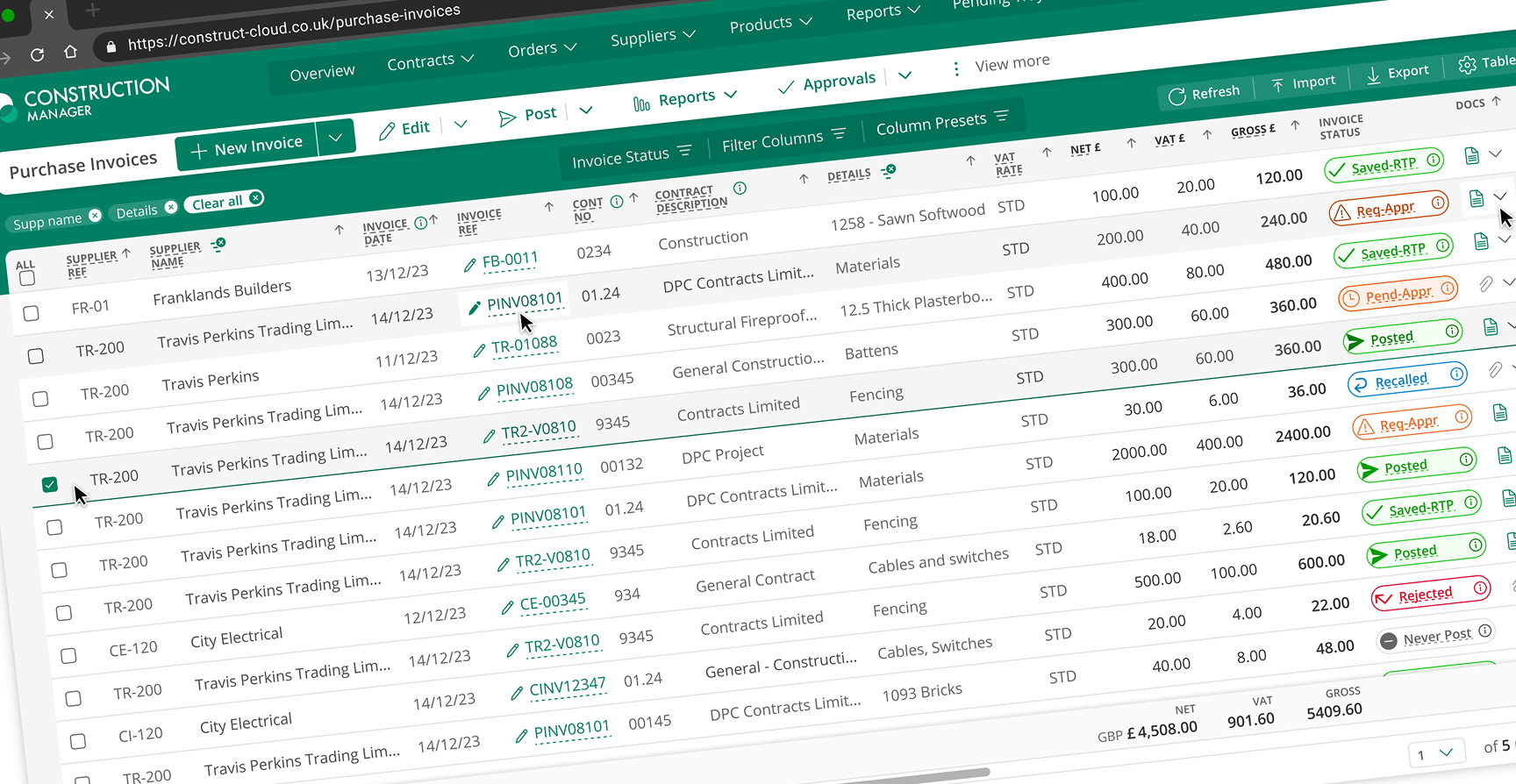
Construct Cloud - hero composition showing the redesigned finance interface at angle
The brief

A finance product mid-transformation, and a design practice to build alongside it.

Eque2 builds finance software for the UK construction industry, with integrations into Sage and Xero. After a short engagement with Glue Agency, the company hadn't yet had a permanent designer in seat. I joined as the first - to take ownership of design on Construct Cloud, the company's flagship SaaS product.

The remit ran on three threads, all live from day one: introduce the research and design-thinking practice the company didn't yet have, create and roll out a new design system, and ship dev-ready design in-sprint against an active roadmap.

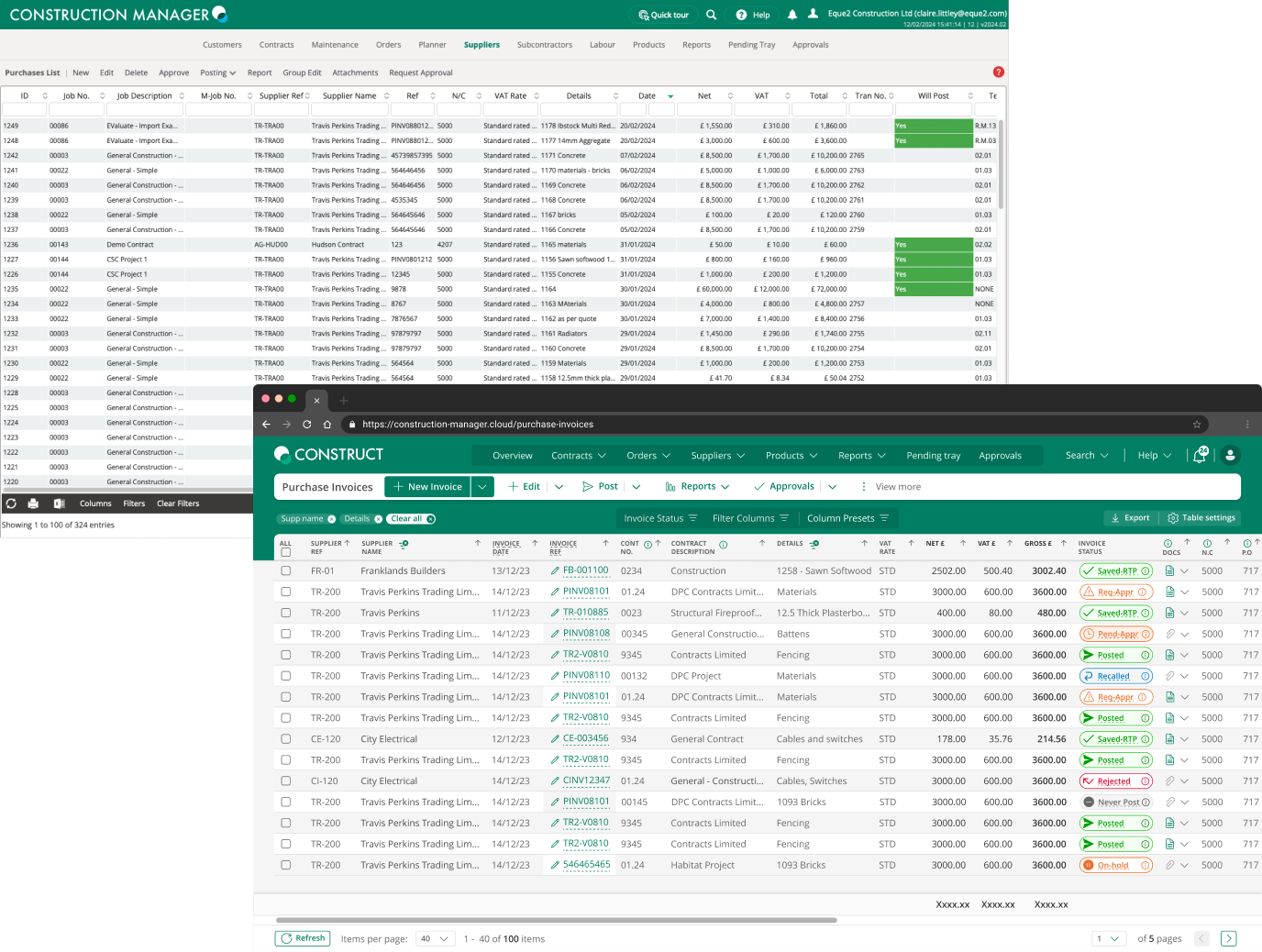
Construction Manager - before and after the redesign

Construction Manager · before + after

Strategy

Three threads, in parallel.

The first thread was educational, and it was explicit in the brief. The head of product had hired the role for design output and design literacy in equal measure - workshops, internal interviews, and structured research with end-clients (accountants, contractors, finance leads), pulling evidence into product decisions that had previously been made on engineering instinct.

The second was the system itself. Microsoft Fluent 2 chosen as the base, customised for Eque2's product reasoning, built and governed in parallel with the development work. The rollout was atomic by design: small assets first, then patterns, then microcosms - so the team learned the system as they built it, rather than meeting it as a finished thing.

The third was operational. Weekly delivery, in-sprint, against a roadmap that did not pause while the other two threads were being built. All three fed each other: research shaped what went to development; the system gave the development team a foundation to build against; what went to development surfaced the questions that needed researching next.
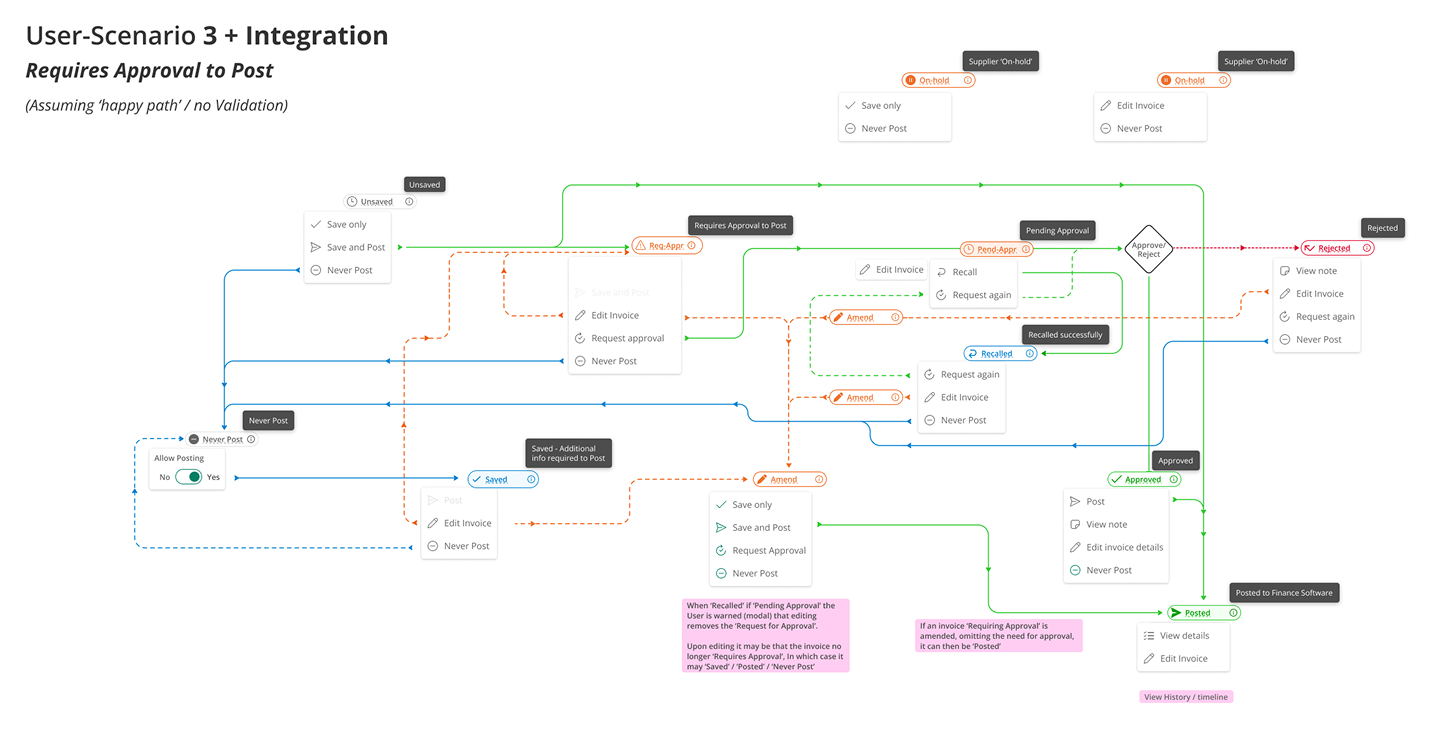
User scenario diagram - approval flow for a finance line item requiring sign-off

User scenario 3 of 5 · approval flow

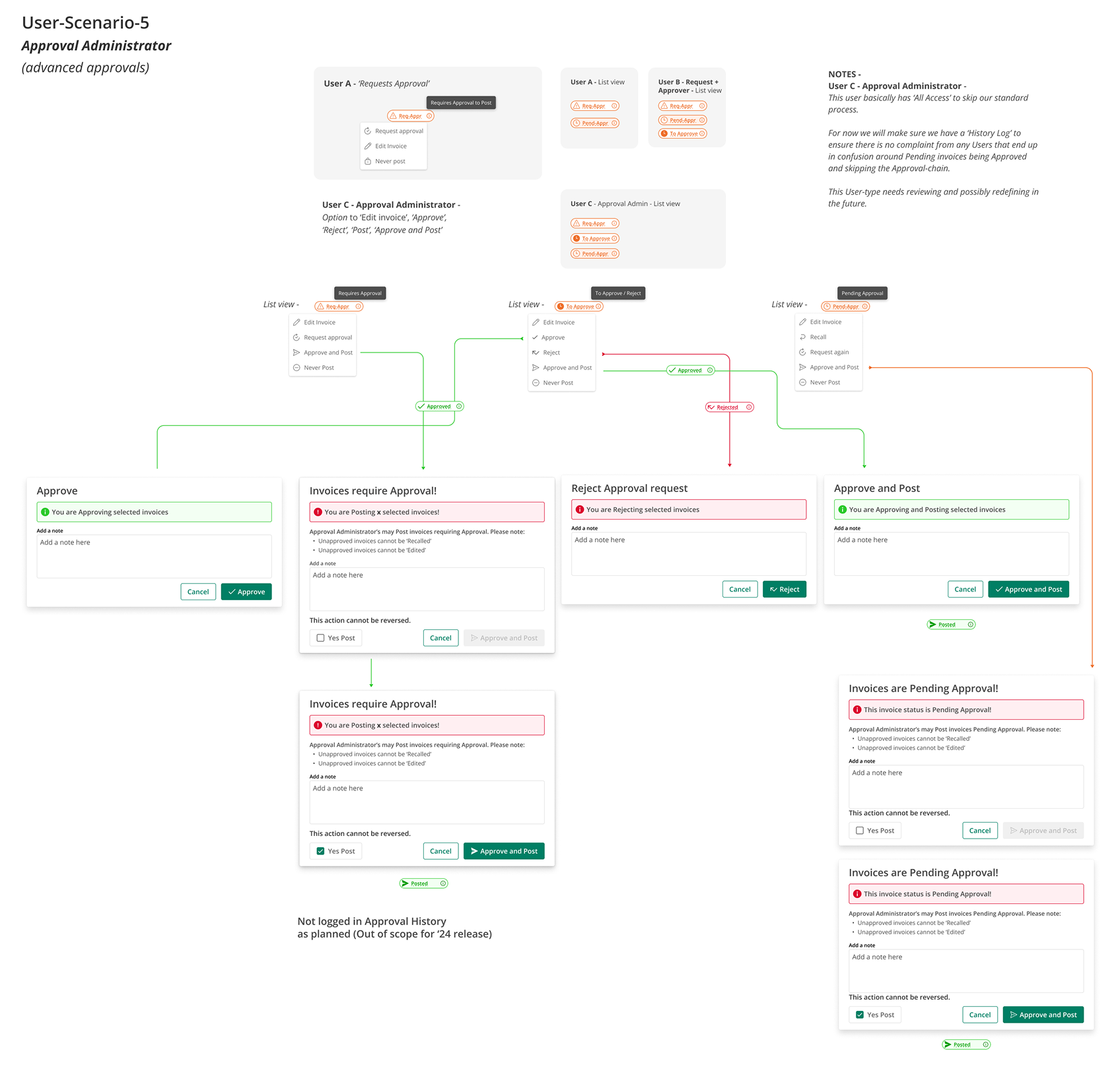
User scenario diagram - administrator flow for permissions and configuration

User scenario 5 of many · administrator flow

The design system

A bespoke system, on top of Fluent 2.

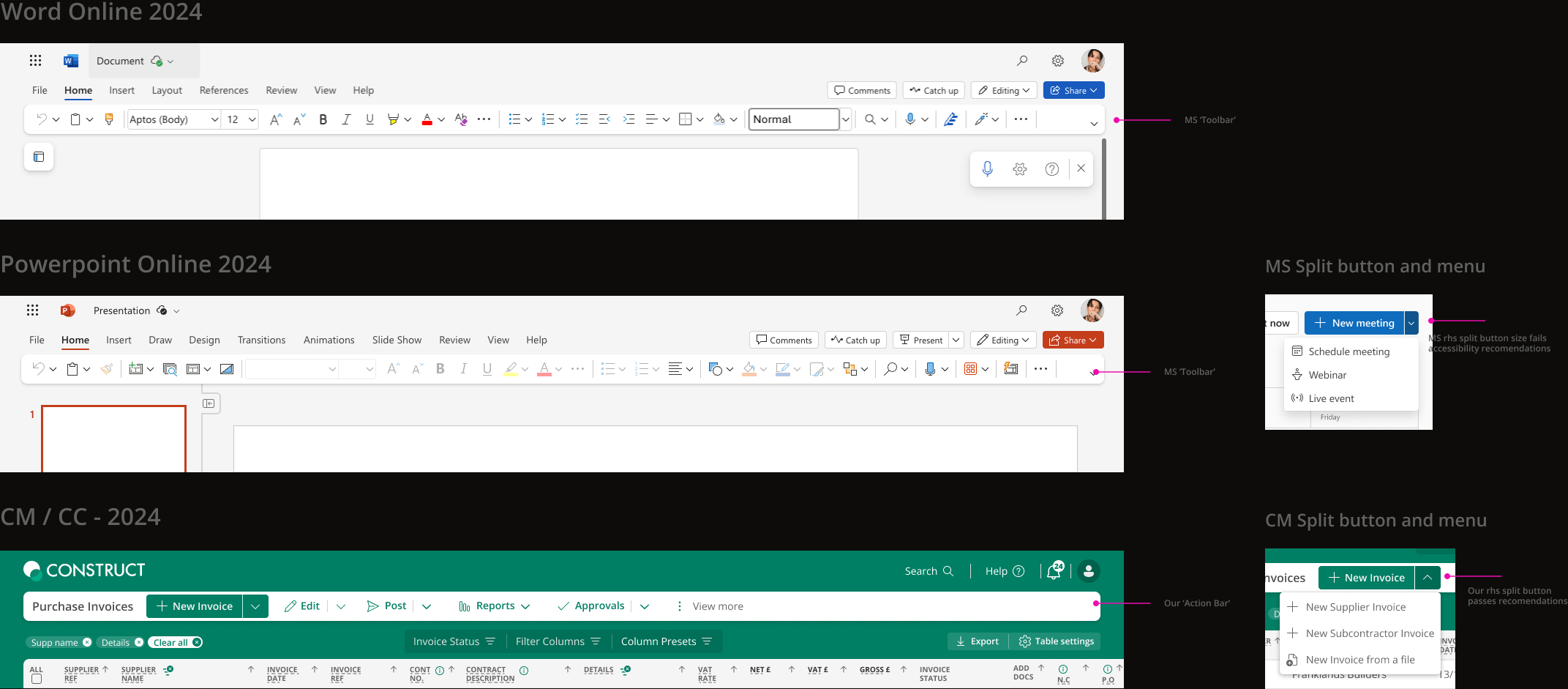
Construct Cloud is used every day by people who already live in Excel and Sage. Familiarity matters - so does daylight from those tools, where Eque2's product reasoning is sharper. Microsoft Fluent 2 was chosen as the base. Close enough to feel familiar to power users; distinct enough to carry Eque2's own logic.

Components were designed for density without losing accessibility. Patterns prioritised list-and-edit interactions - the operational rhythm of a finance tool - over decorative chrome.

Study showing alignment of Eque2 components with Microsoft Fluent 2 Design System

Study showing alignment with Microsoft Fluent 2 Design System

The table

Where the work actually happens.

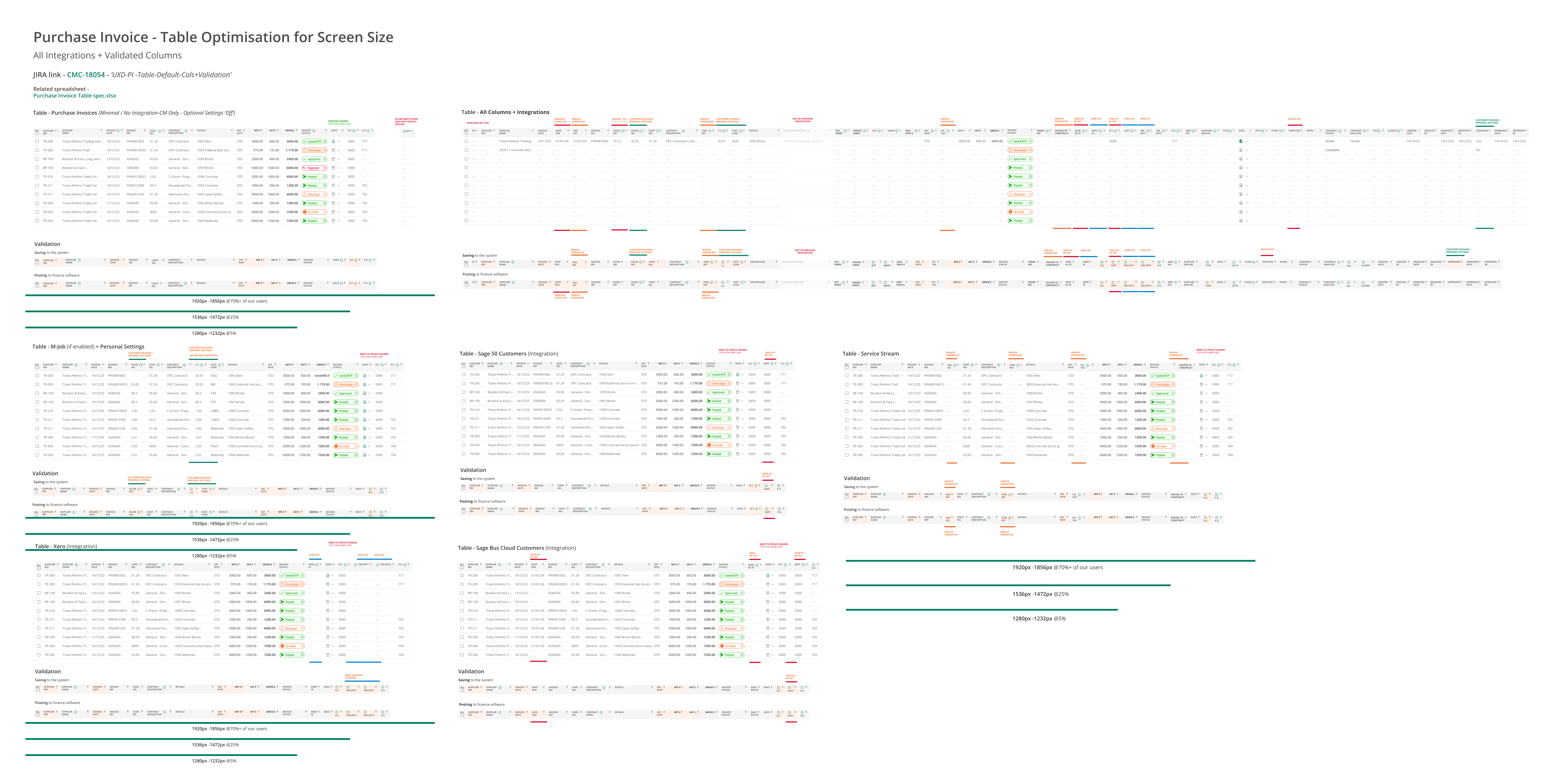
Most finance tools live or die in their tables. Construct Cloud's were under-optimised: too many columns, inconsistent edit affordances, and validation that surfaced after the fact rather than as the user typed.

The redesign rebuilt column behaviour around what users were actually scanning. Edit mode was clarified - inline where it belonged, modal where it didn't. Validation moved to the moment of input, in context. A persistent action bar held each decision until the user chose to land it - no accidental saves, no uncertain state.

70% of users sat at 1536px - Windows at default scale - so columns were prioritised against that width first, with anything secondary moved into horizontal overflow. The work covered around fifteen table variations across integrations (Sage 50, Xero, Sage Business Cloud, M-Job, Service Stream), each tuned to the same constraint.

Table column optimisation and validation - across integrations and customer subscriptions

Table column optimisation + validation across integrations and customer subscriptions

Batch invoicing

Two screens, one workflow.

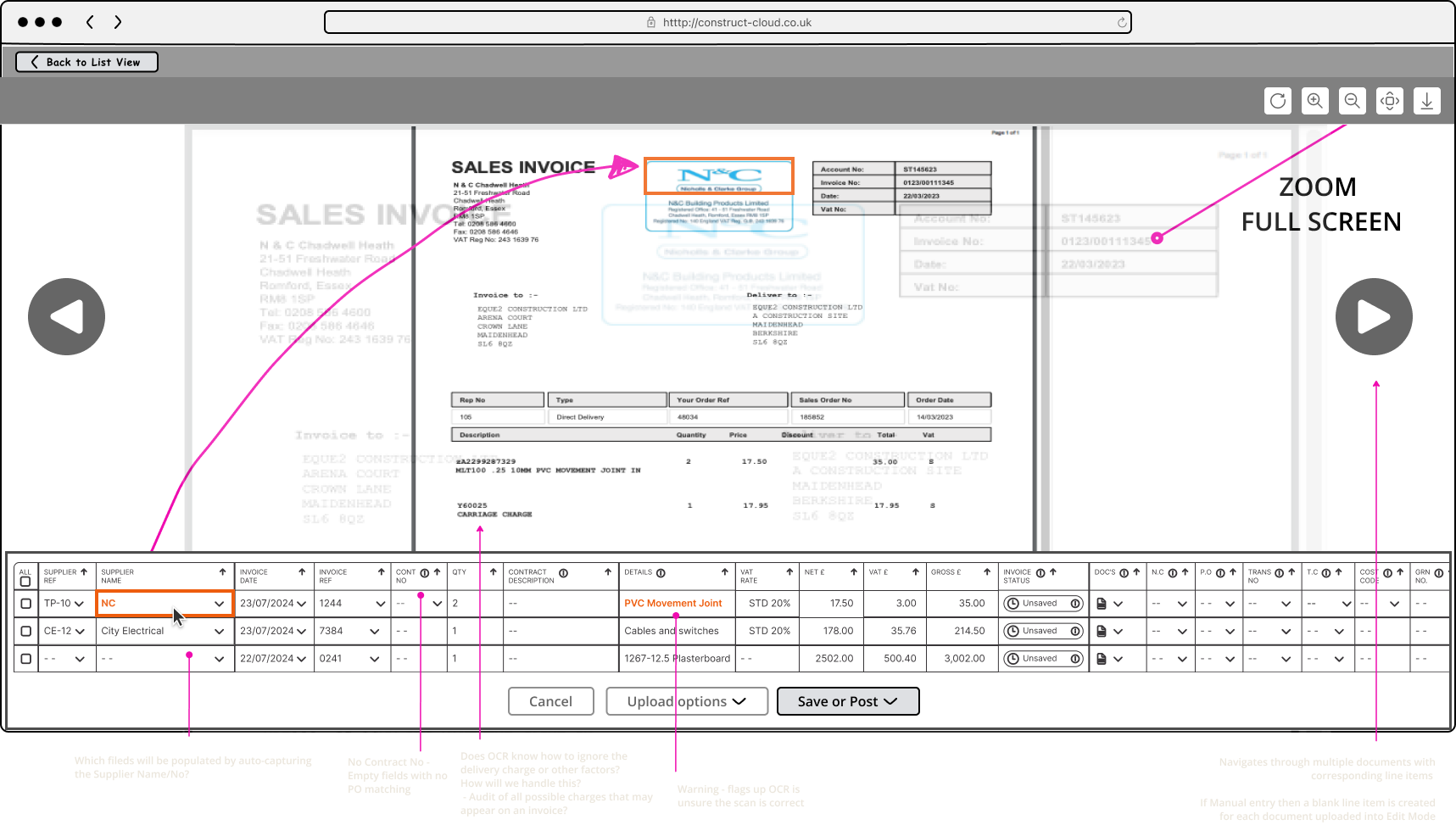
Finance teams in construction process invoices in bulk. The pre-existing workflow asked users to open a PDF on one screen and Construction Manager on the other, transcribing line items between the two. Slow, error-prone, and one of the most-cited complaints in the user research I'd been running.

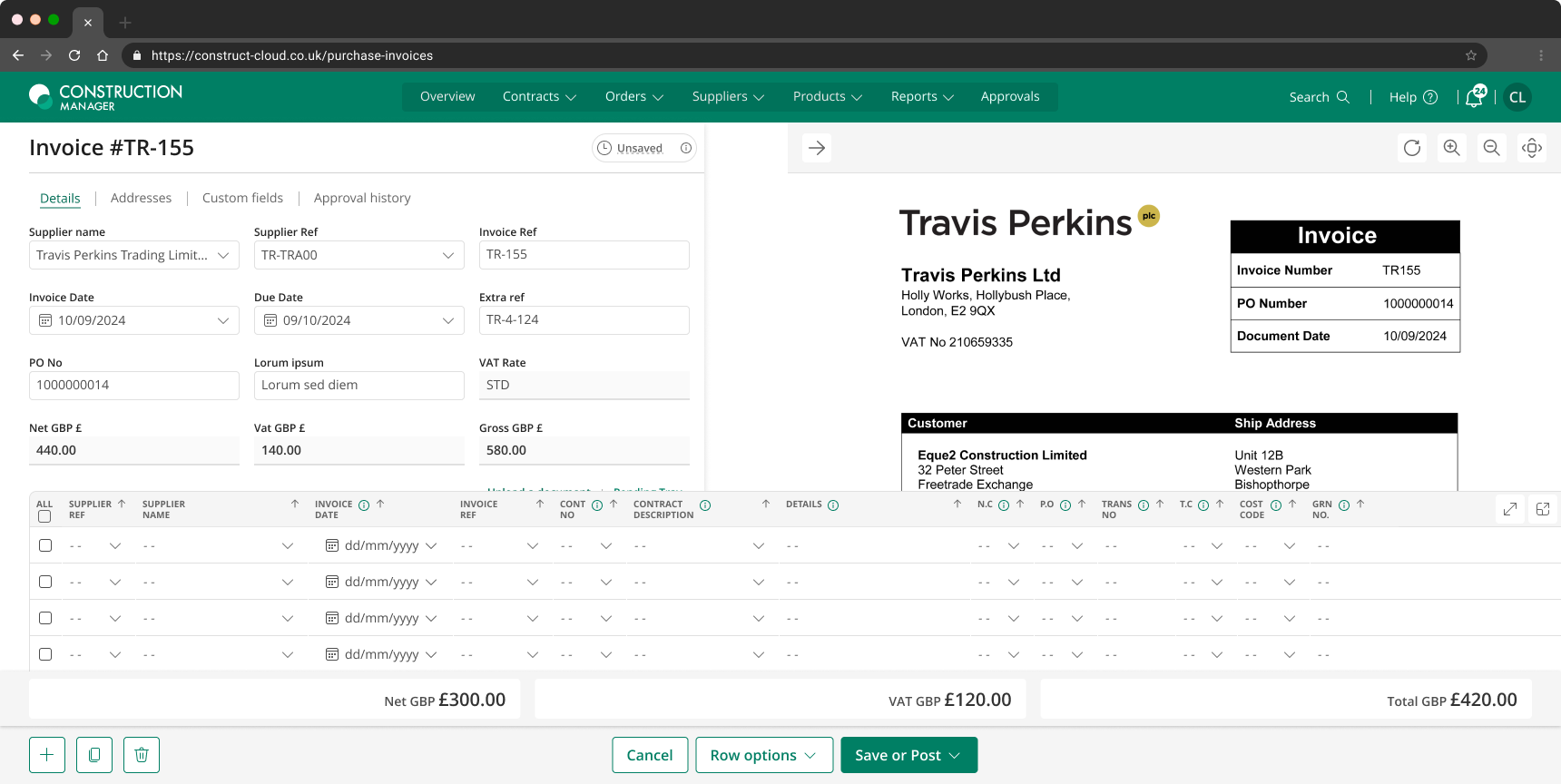
The redesign brought both into a single view. PDF preview alongside the capture form, with multiple invoices queued in sequence rather than opened one at a time. The data the user needed to enter sat next to the document they were reading it from - edit, validation and review staying in the same plane as the source.

Designed at concept and prototype, validated through multiple rounds of user testing - first on flat images, then on clickable prototypes. Shipped into Construction Manager, with the layout designed to host OCR auto-capture as a later layer, so when the automation came it could sit on a model the team and users already knew.

Prototype concept for batch invoice processing, annotated for the development team

Prototype concept · batch invoice processing

Construction Manager - batch invoicing landed in product, with PDF preview alongside line-item capture

Construction Manager · batch invoicing in product

The wider work

Building practice, not just product.

Alongside the product work I set up the foundations: research cadence, design-engineering handoff, design-system governance, and a Product-UXD process - most of which didn't exist before. The role itself ran in three modes at once: sprint designer day-to-day, running internal workshops and Figma sessions with the development team, and presenting the work upward into the wider business so it was visible past the immediate team. The hardest of the three threads, by some margin, was the cultural one. Design-thinking was a new vocabulary in a business going through its own digital transformation, and the team I was building it with hadn't worked in a product environment before. A lot of the work was the workshops, conversations and worked examples behind the visible output.

Table drop-down filtering example from Construction Manager

Table drop-down filtering example

"Three threads, in parallel: build, ship, embed. The hardest part was the cultural one - design-thinking as a new vocabulary in a business going through its own transformation."

Project note

Outcome

A clearer foundation, and a practice the company didn't have before.

I left Eque2 with a working design system, an in-sprint delivery rhythm, an established research practice, and a Product-UXD process. None of it had existed when I arrived.

Disciplines: research, UX, UI, design system, practice. Team: Eque2 product and engineering. Stack: SaaS web, Microsoft Fluent 2 base.

Top